Back
Context
This project was for a course named SI 422 at the University of Michigan and focused solely on UX research.
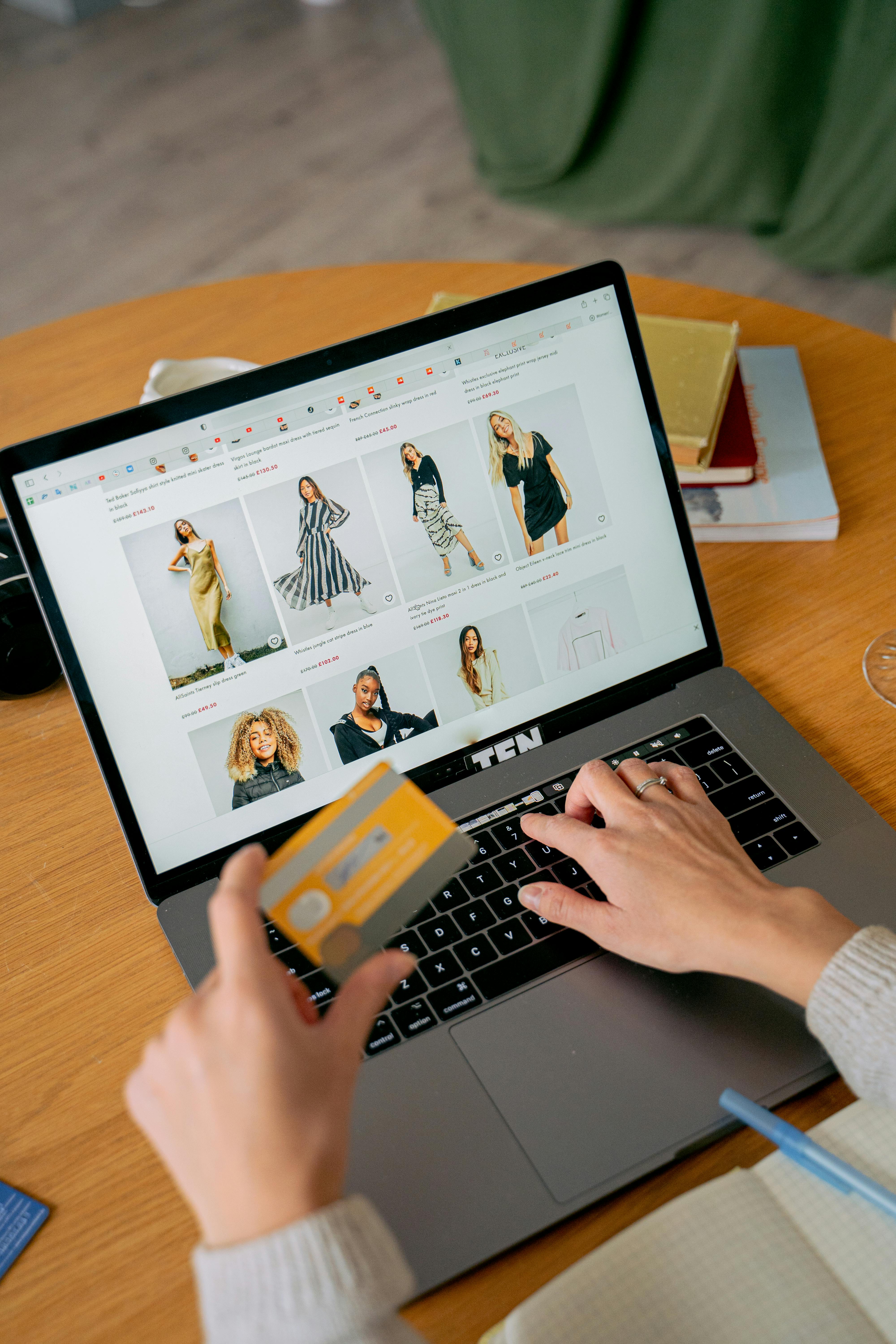
For this project, I aimed to understand how users view online shopping with the goal to gain information for a theoretical shoppings service that uses 3D modeling technology combined with clothing mapping to help users to shop more efficiently and waste less. This product would also help companies get better insight as to which clothes users are buying and what sizes they need to be producing.
Since the users of this service would be online shoppers, the goal of my research was to understand how people currently online shop and the pain points they feel throughout the online shopping experience. Because this product has not been developed, it was important to me to understand what should be include in this product should it ever be created.
Deep Dive
Processes And Methods
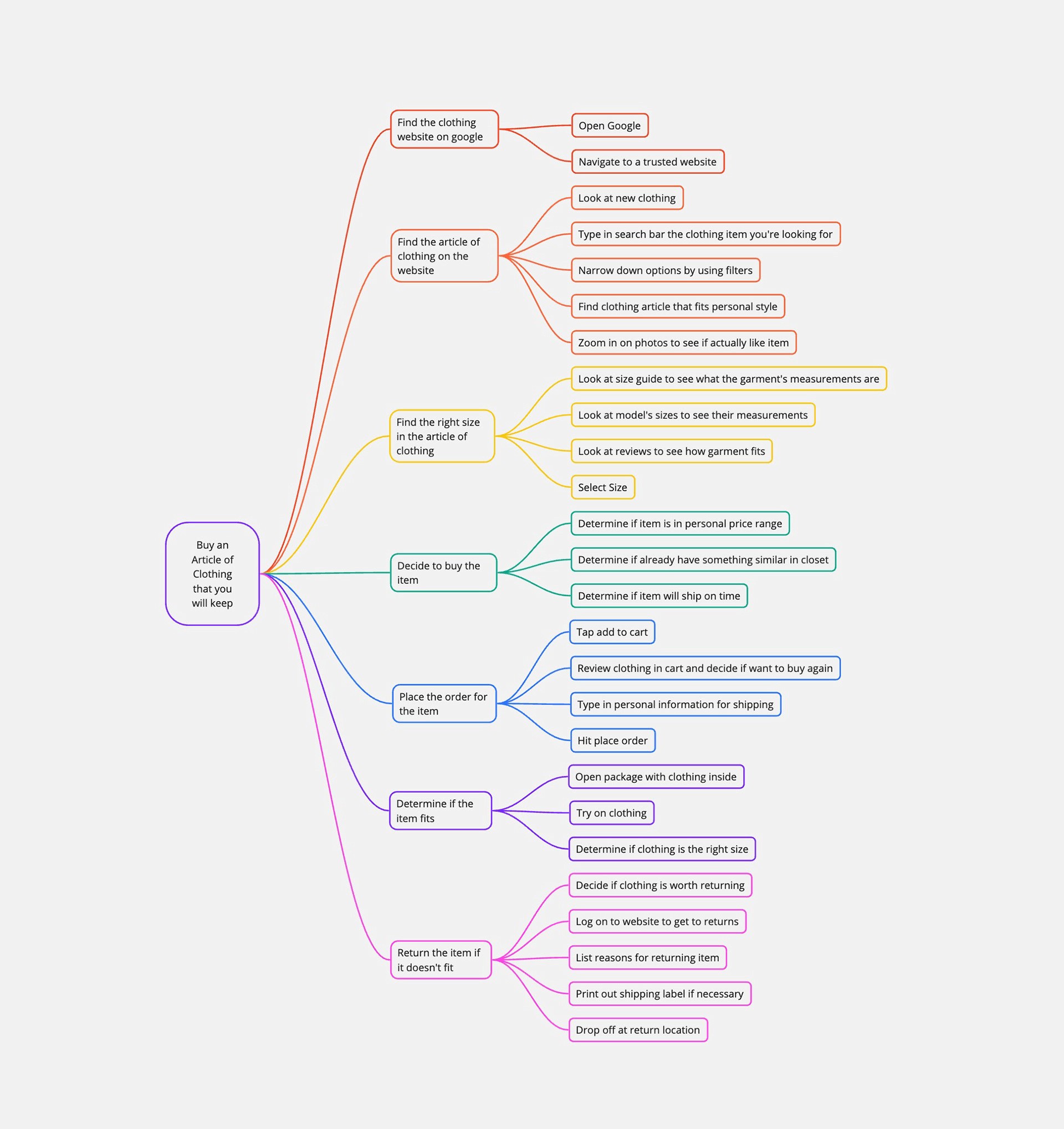
In order to get this information, I conducted interviews and a contextual inquiry activity with 5 participants. Throughout these interviews, I had the users walk me through how fashion and clothing fit int heir daily lives, as well as asked about different stages throughout the online shopping process such as how they find clothes they want to buy, how they determine what sizes fit them, and how they deal with returning clothing. During the contextual inquiry, I had users walk me through how they would purchase an item of clothing, being sure to emphasize any aspects of online shopping that they particularly liked or disliked.
Insights
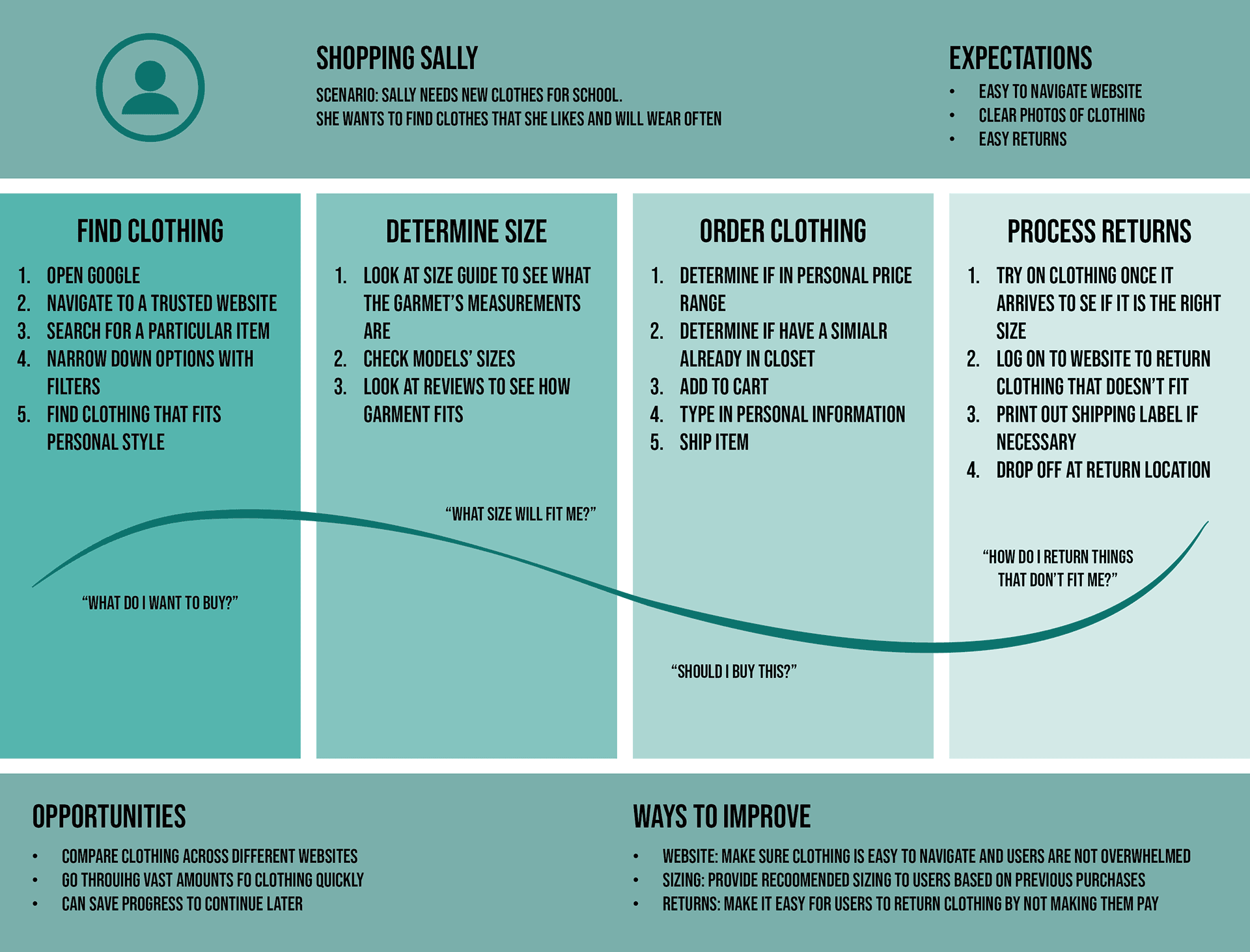
From my research, I was able to identify a few places in which online shopping could be improve. First, I learned that people mostly shopped at websites they had shopped at before because they felt they could trust the websites. This prevented them from exploring new options. Second, I learned that people often shopped for events or specific clothing articles, and so having clear navigation is important for online shopping websites. Third, I learned that people had trouble finding which size they are in the clothing, and would use tricks such as looking at the model's size or ordering multiple sizes to try on. Finally, I learned that shoppers sometimes would not return clothing that didn't fit them because the return process was too harrowing.
In order to design a better shopping experience for the future, these pain points need to be addressed. A future product to online shopping must be reliable so users will shop at it often, have lear navigation and filters for users to find products, help users find their size (possibly by showing how the article of clothing will look on them) and finally the return process needs to be seamless so that users will not keep clothing that does not fit them and they will not wear.
Ethics and Bias
While these interviews attempted to understand pain points in the online shopping experience, there were a few limitations. Only five interviews were conducted, meaning that the data could be easily skewed and there is also a possibility for other themes to reach data saturation with more information. There was also only one interviewee who identified as male, so there is room to understand more about how all genders experience online shopping. In the interview itself, there could also have been more questions about which measurements the users took to determine fit of the clothing they wore, and other questions about how the. users determined which clothing they liked to buy. In the future if I could continue my research, I would attempt to rectify these limitations by interviewing a larger and more diverse group of individuals. I would also like to observe more clearly how people online shop on a daily basis.